French Drain & Exterior Drainage in Kernersville, NC
French drain and exterior drainage is the service of redirecting surface water and groundwater away from a home's foundation before it can enter the crawl space — using buried French drains, downspout extensions, and regrading. It is offered for homeowners in Kernersville, North Carolina and the surrounding Triad whose crawl space water problem is driven by runoff, slope, or short downspouts rather than (or in addition to) a high water table. The outcome is a foundation that sheds water instead of collecting it, so the crawl space stays dry at the source rather than being pumped out after the fact.
Call (336) 276-2092 for a free quoteGET A FREE QUOTE
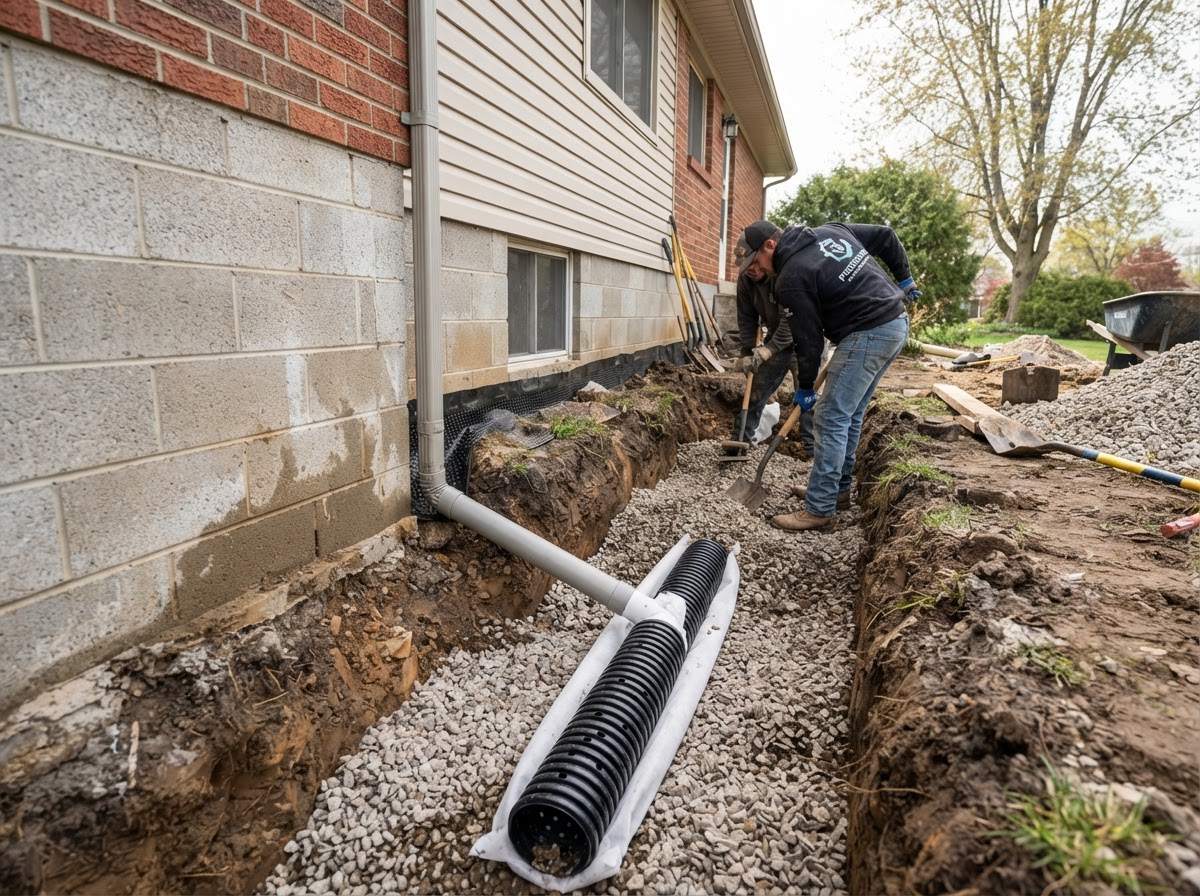
What does French drain and exterior drainage involve?
Exterior drainage manages water before it reaches the foundation. A French drain is a trench dug along the foundation (or along the slope above the home) filled with gravel and a perforated pipe that collects and carries water away. Downspout extensions move roof runoff from the gutters well out from the foundation instead of dumping it at the corner. Regrading changes the slope of the soil around the home so surface water flows away rather than toward the crawl space. These measures are exterior — they happen outside the home — and they complement any interior crawl space waterproofing and sump pump work. The principle is simple: the less water that reaches the foundation, the less water the crawl space systems have to handle.
When do you need exterior drainage?
Exterior drainage is needed when surface water or runoff is a major source of crawl space moisture. The signs include:
- Water pooling near the foundation after rain, or soil that stays soggy along the house.
- A yard or driveway that slopes toward the home, directing runoff at the crawl space.
- Downspouts that discharge right at the foundation corner, dumping roof water against the wall.
- Water entering the crawl space on the side facing a hill, slope, or uphill neighbor.
- A crawl space that stays wet even after an interior sump pump and vapor barrier are installed, pointing to an exterior source.
- Erosion or washout along the foundation, indicating concentrated runoff.
Why is exterior drainage important in Kernersville?
In the Piedmont, heavy summer thunderstorms can dump a lot of water in a short time, and the clay soil absorbs it slowly — so a large share of that water runs across the surface. Homes built on sloped lots, at the base of a hill, or with gutters that dump water at the foundation see that runoff directed straight at the crawl space. Once the soil around the foundation is saturated, the water presses against the walls and enters through the footing. Interior waterproofing manages water that has already gotten in; exterior drainage reduces the volume of water approaching the foundation in the first place. For many Kernersville homes, the most effective fix is exterior — stopping the water at the source — paired with interior systems for whatever still gets through.
Across the Kernersville 27284 and 27285 zip codes in Forsyth County, sloped lots and downspouts that dump at the foundation make exterior drainage the first fix for many wet crawl spaces. It is one of the most common reasons homeowners contact us for crawl space services in Kernersville.
What affects the cost of French drain and exterior drainage?
Cost is driven by the linear feet of trench to be dug, the depth of the drain (deeper drains handle more water but require more excavation), the type of pipe and gravel, the length of downspout extensions and underground runs, whether regrading with equipment is needed, and the difficulty of the site (landscaping, hardscaping, slope, and access all affect the work). Trenching along a foundation with limited access costs more than an open yard run. Your written quote itemizes the drainage, extensions, and any grading work, with the cost drivers behind each.
Interior drainage or exterior drainage — which do you need?
Interior perimeter drainage manages water that has already entered at the footing; it is less disruptive and works regardless of exterior access. Exterior French drains and grading manage water before it reaches the foundation; they are the right call when surface runoff, slope, or short downspouts are the main source. Many homes need both — exterior work to cut the volume approaching the foundation, and interior drainage with a sump pump to handle what still gets through. The inspection identifies where the water is coming from and which approach fits your property and budget.
What does the exterior drainage process look like?
- Inspection. The crew assesses the lot's slope, downspout discharge points, soil, and where runoff flows during rain.
- Written quote. You receive a quote specifying the French drain location and length, downspout extensions, and any regrading.
- Trenching. A trench is dug along the foundation or the slope above the home, with careful handling of landscaping and hardscaping.
- Drain installation. Perforated pipe and gravel are installed in the trench, and the drain is routed to a safe discharge point.
- Downspout extensions. Roof runoff is directed underground or well away from the foundation.
- Regrading. Soil slope is corrected where needed so surface water flows away from the home.
- Final check. The system is tested with water, and the discharge point is verified to move water well clear of the foundation.
Frequently asked questions
Will a French drain fix my wet crawl space by itself?
It depends on the source. If surface runoff and short downspouts are the main cause, exterior drainage can dramatically reduce or eliminate the water. If water is also entering through the footing or rising with a high water table, interior drainage and a sump pump are still needed. The inspection identifies the source so you do not pay for exterior work that does not address the real problem.
How long does a French drain last?
A properly installed French drain with the right pipe and gravel lasts many years, though it can slow over time if silt builds up. Some installations include a filter fabric to reduce clogging. The inspection covers what to expect for your soil conditions and whether any maintenance is needed over the drain's life.
Does exterior drainage require digging up my yard?
Yes — a French drain is a buried trench, so installation involves excavation along the foundation or the slope above the home. The crew takes care to minimize disruption to landscaping and hardscaping, and the quote spells out exactly what is included and what will be restored. Downspout extensions and regrading are less invasive than a full French drain.
Is a permit needed for exterior drainage?
Exterior drainage work generally does not require a permit, but discharge routing that ties into a storm system or crosses a property line may have local requirements. The specifics for your property are confirmed during quoting.
What happens if I ignore the runoff problem?
Water keeps pressing against the foundation, entering the crawl space, and saturating the soil that supports your piers and footing. Over time that leads to water in the crawl space, higher humidity, wood rot, and settling supports — see crawl space repair. Exterior drainage addresses the water at its source, which is cheaper than managing the damage it causes downstream.