Crawl Space Insulation in Kernersville, NC
Crawl space insulation is the service of installing the right type of insulation in the right place under a home — replacing damp, fallen fiberglass with closed-cell spray foam on the walls or rigid foam board — so that the crawl space stops losing heat in winter and stops condensing humidity in summer. It is offered for homeowners in Kernersville, North Carolina and the surrounding Triad whose floors are cold in winter, whose fiberglass batts have fallen out of the joist bays, or whose crawl space is being encapsulated and needs wall insulation as part of the seal. The outcome is a warmer floor upstairs, lower HVAC load, and an insulation assembly that does not absorb moisture and fail the way fiberglass does in a vented crawl space.
Call (336) 276-2092 for a free quoteGET A FREE QUOTE
What does crawl space insulation involve?
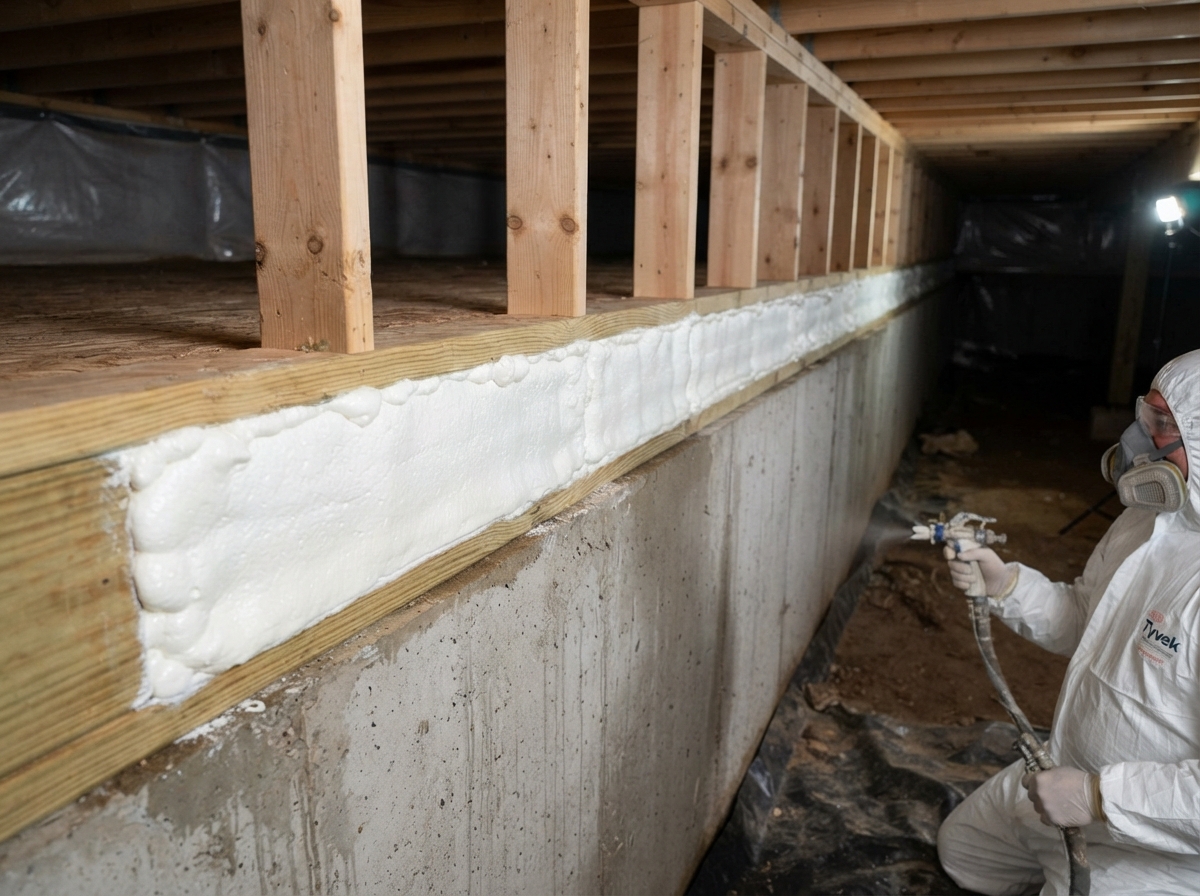
There are two main approaches, and the right one depends on whether the crawl space stays vented or gets sealed. In a vented crawl space, insulation historically meant fiberglass batts stuffed between the floor joists above — but in a humid climate those batts absorb moisture, sag, and fall out, which is why so many Kernersville homes have insulation lying on the ground. In a sealed (encapsulated) crawl space, the insulation goes on the foundation walls instead, using closed-cell spray foam or rigid foam board. This insulates the space as part of the building's conditioned envelope and keeps the floor above warm without putting absorbent fiberglass in a wet location. The service includes removing the failed old insulation, treating any mold it hid, and installing the new assembly correctly.
When do you need new crawl space insulation?
The signs that existing insulation has failed or that a crawl space needs a different insulation approach include:
- Fiberglass batts that have fallen from the joist bays or are hanging in damp clumps.
- Cold floors upstairs in winter, even with the HVAC running.
- High indoor humidity in summer that strains the HVAC system.
- Visible mold or dark staining on the subfloor where wet insulation sat against it.
- A crawl space that is being encapsulated and needs wall insulation to complete the thermal seal.
- Drafts or uneven temperatures in the rooms directly above the crawl space.
Why does crawl space insulation fail in Kernersville?
Fiberglass insulation fails in this climate because it is an absorbent material placed in a wet environment. A vented Kernersville crawl space sees humid air much of the year, and that humidity condenses on the cooler surfaces inside — including the fiberglass and the subfloor. The batts soak up that moisture, gain weight, and sag out of the joist bays. Once they are wet, they stop insulating and start growing mold. The deeper problem is that insulating between the joists of a vented crawl space fights the local climate instead of working with it: it tries to keep the floor warm while leaving the space below open to humid outside air. Wall insulation in a sealed crawl space solves this by moving the thermal boundary to the foundation walls and conditioning the air inside, so there is no cold surface for condensation to form on.
The same failure shows up across the Kernersville 27284 and 27285 zip codes in Forsyth County, where vented crawl spaces and humid summers turn fiberglass between the joists into a recurring problem. It is one of the most common reasons homeowners contact us for crawl space services in Kernersville.
What affects the cost of crawl space insulation?
Cost depends on the insulation type and the area to be covered. Closed-cell spray foam costs more per square foot than rigid foam board but offers a higher R-value per inch and adds some structural rigidity and moisture resistance. The perimeter length and wall height of the crawl space determine the area, and access matters — low clearance slows installation. Removing and disposing of the old failed fiberglass is a separate scope that adds to the job if the space has not been cleaned out. If the insulation is being installed as part of a full encapsulation, it is bundled with the vapor barrier and dehumidifier scope. Your written quote breaks out the insulation portion and the cost drivers behind it.
Insulate the floor or the walls — which is right?
For a vented crawl space that will stay vented, insulation between the floor joists is the only option, but in this climate it is the option most likely to fail. For a crawl space being encapsulated, insulating the foundation walls is the better choice: it brings the crawl space inside the home's thermal envelope, eliminates the cold surface where condensation forms, and avoids putting absorbent insulation in a location that gets wet. The inspection determines which approach fits your home — if the crawl space is being sealed, wall insulation is almost always the recommendation.
What does the insulation process look like?
- Inspection. The crawl space is inspected for existing insulation condition, moisture, and mold. The insulation approach is determined based on whether the space will be vented or sealed.
- Written quote. You receive a quote covering removal of old insulation, any mold treatment, and installation of the new insulation assembly.
- Cleanout. Failed fiberglass and debris are removed — see crawl space cleanout & debris removal — and any mold on the wood is treated.
- Insulation installation. Closed-cell spray foam or rigid foam board is installed on the foundation walls (in a sealed crawl space) or, less commonly, new batts are installed between joists (in a vented space).
- Sealing. If part of an encapsulation, vents and doors are sealed and the vapor barrier and dehumidifier are installed alongside the insulation.
- Final check. The crew verifies coverage and the finished assembly is walked through with you.
Frequently asked questions
Why not just put new fiberglass back in the floor?
You can, but in a humid Kernersville crawl space it will likely fail the same way the old fiberglass did — absorbing moisture, sagging, and growing mold. Fiberglass between joists only makes sense in a dry, vented crawl space, which is rare in this climate. If the space is being encapsulated, wall insulation is the durable choice.
Is spray foam safe to use in a crawl space?
Closed-cell spray foam is a standard material for crawl space walls in encapsulated homes. It is installed by the crew with proper ventilation during application, and it cures to an inert, moisture-resistant layer that also adds some rigidity to the wall assembly. The inspection confirms whether your foundation walls are suitable for foam.
How much does insulation change the temperature upstairs?
Most homeowners notice warmer floors in winter and more even temperatures in the rooms above the crawl space. The exact improvement depends on how much insulation was missing or failed before and how the rest of the home is insulated. Sealing and insulating the crawl space also reduces the humidity load on the HVAC, which helps summer comfort.
Does insulation need a permit?
Insulation work itself typically does not require a permit, but if it is part of an encapsulation that includes structural repair or electrical work for a dehumidifier, those portions may be permitted. The specifics for your property are confirmed during quoting.
What happens if I leave the failed insulation in place?
Wet fiberglass stops insulating and starts harboring mold, so the floors stay cold and the mold spreads to the subfloor. Leaving it also means the moisture it holds keeps the wood above the rot threshold. Removing the failed insulation and replacing it with the right assembly stops both problems.