Crawl Space Repair in Kernersville, NC
Crawl space repair is the service of fixing the structural and moisture damage that has already happened inside a home's crawl space — rotted or weakened floor joists, settled or failing support posts, degraded insulation, and the water entry that caused it all. It is offered for homeowners in Kernersville, North Carolina and the surrounding Triad whose crawl space has progressed past a moisture problem into actual damage to the wood and supports holding up the house. The outcome is a crawl space where the framing is restored to strength, the supports are stable, and the moisture source is addressed so the repair does not rot again.
Call (336) 276-2092 for a free quoteGET A FREE QUOTE
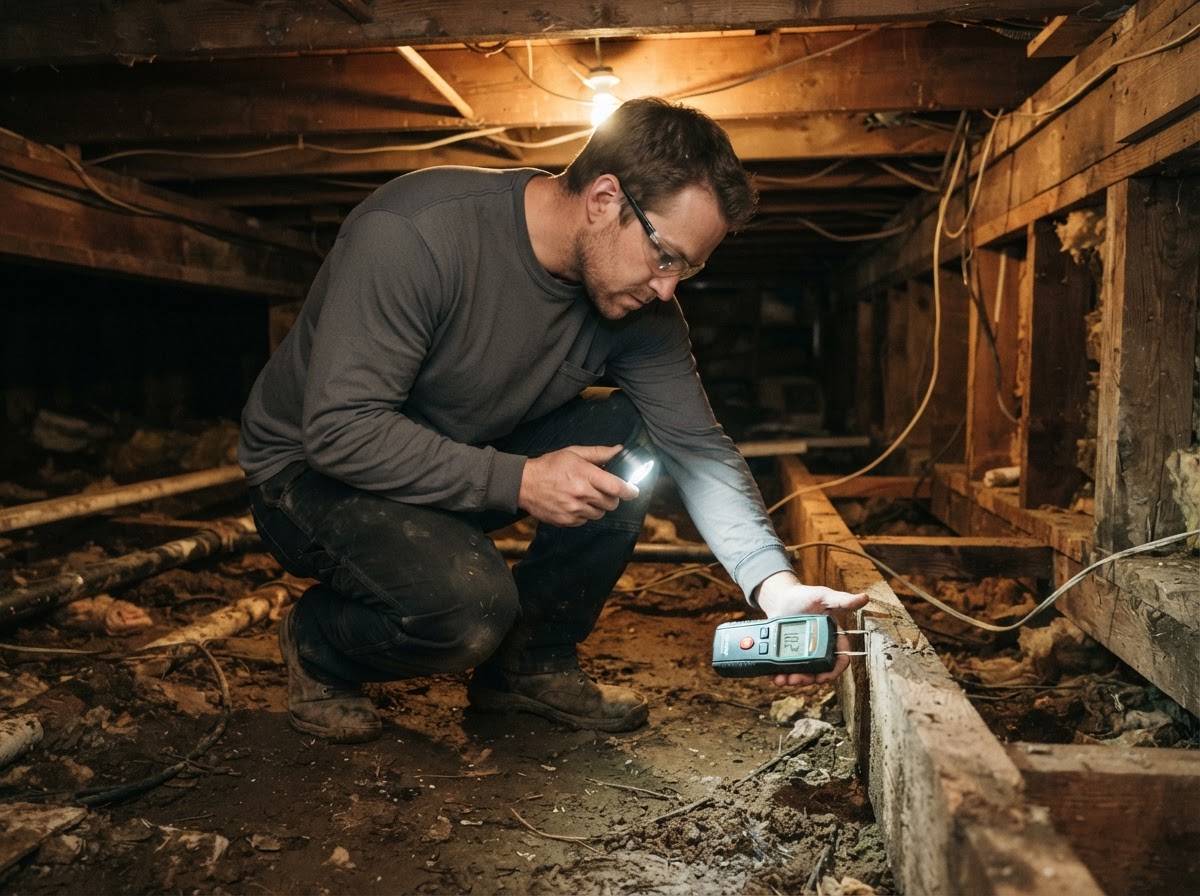
What does crawl space repair involve?
Crawl space repair covers the physical fixes underneath the house. That can include sistering new lumber alongside rotted joists or replacing them entirely, repairing or replacing the main girder beam, installing or resetting support posts and concrete pads, and re-leveling floors that have sagged. It also includes removing the insulation that has absorbed moisture and failed, treating any mold on the wood, and addressing the water that caused the damage — whether that means a sump pump, drainage, or a full encapsulation. The defining feature of repair, versus encapsulation alone, is that the wood and supports are the focus: the structure has to be made sound before sealing the space makes sense.
When do you need crawl space repair?
Repair is needed when the damage is no longer just humidity but actual weakening of the structure. The signs include:
- Floors that bounce, slope, or feel soft when you walk — often most noticeable in the middle of a room.
- Doors or windows upstairs that stick, won't latch, or have gaps that have appeared over time, indicating the framing has shifted.
- Visible rot, soft spots, or crumbling when the wood in the crawl space is probed.
- Cracks in interior drywall or tile that trace back to floor movement.
- Support posts that are leaning, sitting on bare soil, or resting on crumbling pier pads.
- A main beam that has sagged or shows water damage along its length.
When floors are involved, see the sagging floor & support jack repair page for that specific scope.
Why does crawl space wood rot and why do supports fail here?
In the Kernersville area the root cause is almost always moisture that has been present long enough to raise the wood's moisture content above roughly 20%, the threshold where rot fungi begin to break down the wood fibers. The region's humid climate and clay soil keep vented crawl spaces damp for much of the year, so joists and subfloor stay wet long enough for rot to take hold. Once the wood weakens, it deflects more under load, the floors sag, and the support posts — often older concrete pads or wood on soil — settle unevenly as the ground beneath them shifts with wet and dry cycles. The damage is cumulative: moisture causes the rot, the rot causes the sag, and the settling supports make the sag worse. Repair addresses all three layers.
The pattern repeats across the Kernersville 27284 and 27285 zip codes in Forsyth County, where the same vented crawl spaces and clay soil keep wood above the rot threshold year after year. It is one of the most common reasons homeowners contact us for crawl space services in Kernersville.
What affects the cost of crawl space repair?
Repair cost is driven by how much wood is damaged and how many supports need work. The main factors are the number of joists that need sistering or replacement, whether the main girder beam needs repair, how many support posts and pads need to be added or reset, whether the floor has to be lifted (and how far), the crawl space's access and clearance, and whether the moisture source still needs to be addressed with waterproofing or encapsulation to protect the new wood. A small area of localized rot costs far less than a crawl space where multiple joists and the beam have failed. Your written quote itemizes the repair scope and the cost drivers behind it.
Repair or replace — when is each the right call?
For individual joists, the decision is repair (sistering a new board alongside the rotted one to restore strength) versus full replacement (removing the damaged joist entirely). Sistering is faster and less disruptive and works when the rot is limited; full replacement is used when the damage runs the full length of the joist or the original was undersized. For support posts, repair means resetting or shimming an existing post; replacement means installing a new adjustable steel or wood post on a proper concrete pad. The inspection determines which approach each damaged member needs — the goal is always to restore full structural capacity, not just patch the visible damage.
What does the repair process look like?
- Inspection. The crawl space is inspected for rot, settlement, floor level, and moisture. Damaged members are identified and photographed.
- Written quote. You receive an itemized repair scope — which joists, beams, and posts, and the moisture work needed to protect them.
- Moisture and mold first. If the space is still wet, water management and mold treatment happen before new wood goes in, so the repair does not rot again.
- Structural repair. Rotted joists are sistered or replaced, the beam is repaired or supplemented, and support posts are installed or reset on proper pads.
- Floor leveling. Where floors have sagged, the framing is lifted in small increments to restore level without stressing finishes above.
- Permit and inspection. Structural repair is permitted and inspected through the local building department.
- Final check. Floor level and the repaired framing are verified, and the crawl space is cleaned out.
Frequently asked questions
Can you repair the crawl space without fixing the moisture?
You can, but the new wood will eventually rot the same way the old wood did. Repair without moisture control is a temporary fix. That is why the inspection identifies the water source first and the quote addresses it alongside the structural work — protecting the repair is part of doing the repair.
How long does crawl space repair take?
It depends on the scope. A few sistered joists and a reset post can be done quickly; replacing multiple joists, repairing a beam, and re-leveling floors takes longer. Your written quote includes the expected timeline after the inspection, so you know the schedule before approving.
Will lifting my floors damage the finishes upstairs?
Lifting is done in small increments to minimize stress on the finishes above. With rigid tile or brittle plaster there is some risk of minor cracking when framing is re-leveled, and the crew points out those risk areas during the inspection so you can decide before work starts.
Does crawl space repair require a permit in Kernersville?
Yes — structural work like replacing or sistering joists, repairing beams, and adding support posts is permitted and inspected through the local building department. The crew handles pulling the permit as part of the job, and the inspection is scheduled before the work is signed off.
What happens if I wait on crawl space repair?
The damaged wood continues to lose strength, floors sag further, doors and windows upstairs shift more, and the repair scope grows — more joists to replace, more supports to add. What starts as a localized fix can turn into a full framing repair, so the cost rises the longer it is left.