Crawl Space Mold Removal in Kernersville, NC
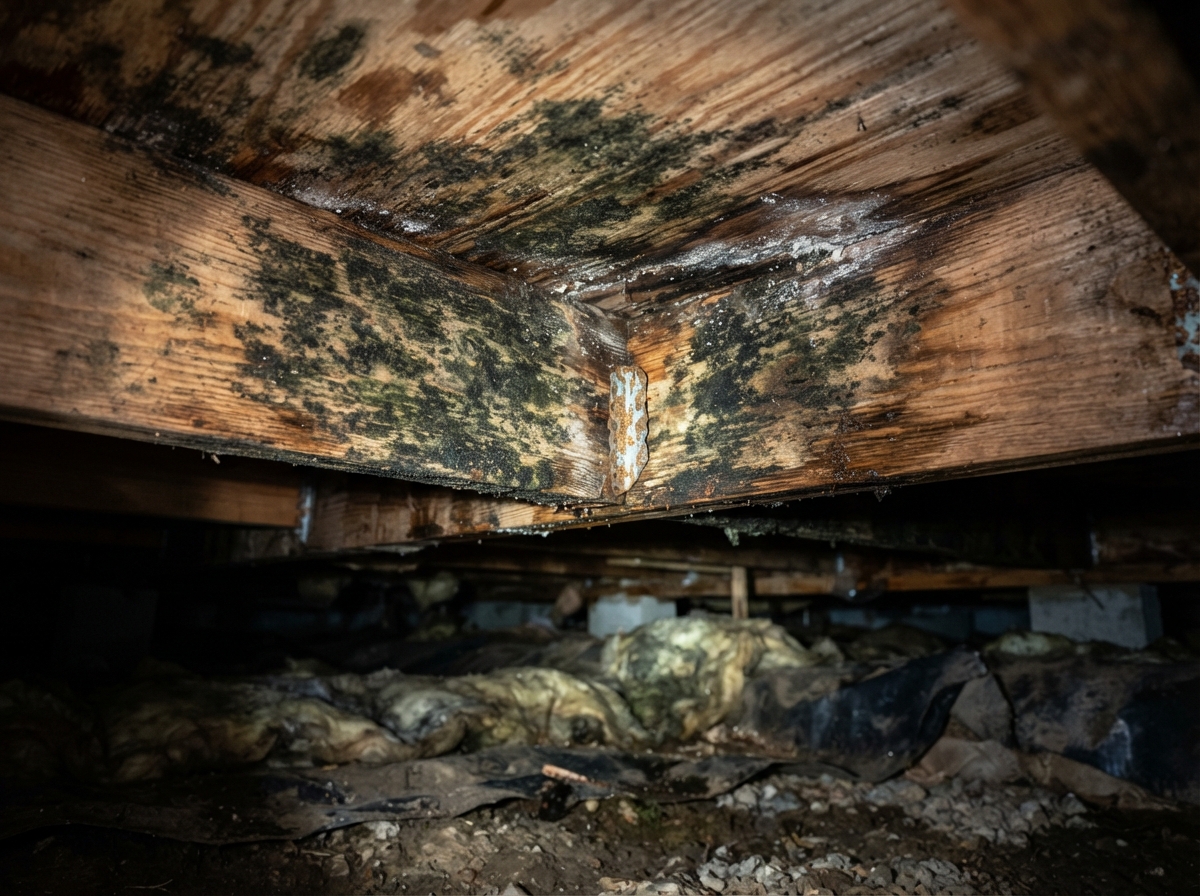
Crawl space mold removal is the service of cleaning and treating mold growth on the wood joists, subfloor, and other surfaces inside a home's crawl space, and then addressing the moisture that allowed it to grow. It is offered for homeowners in Kernersville, North Carolina and the surrounding Triad who are seeing visible mold, dark staining, or a persistent musty smell traced to the crawl space. The outcome is a crawl space where the existing mold is removed and the conditions that grew it are corrected, so the mold does not return.
Call (336) 276-2092 for a free quoteGET A FREE QUOTE
What does crawl space mold removal involve?
Mold removal in a crawl space is more than wiping down visible growth. The process starts with removing the conditions that feed the mold — which usually means taking out wet insulation and debris, addressing any standing water with waterproofing, and reducing humidity. The affected wood is then cleaned: surface mold is removed with appropriate antimicrobial treatment, and the wood is treated to inhibit regrowth. Where mold has penetrated deeply or the wood has rotted, that framing needs repair rather than just cleaning. Finally, the moisture source is sealed — typically with encapsulation, a vapor barrier, and a dehumidifier — because mold removal without moisture control guarantees the mold comes back.
When do you need crawl space mold removal?
Mold removal is needed when mold is actually present in the crawl space and affecting the home. The signs include:
- Visible dark, green, or white fuzzy growth on the joists, subfloor, or girders.
- A persistent musty or earthy smell inside the home, especially when the HVAC runs.
- Dark staining on the wood that was hidden under wet insulation.
- Family members with increased allergy or respiratory symptoms when spending time indoors.
- High humidity in the crawl space measured above roughly 60% during an inspection.
- Mold discovered during a home inspection, real estate transaction, or pest inspection.
Why does mold grow in Kernersville crawl spaces?
Mold needs three things: a food source (the wood and paper in the crawl space), the right temperature, and moisture. In a Kernersville crawl space the first two are always present, so moisture is the controlling factor. The region's humid climate means vented crawl spaces pull in warm moist air for much of the year, and that air condenses on the cooler wood surfaces. The Piedmont's clay soil also releases moisture as vapor from the ground. When the wood's moisture content stays above roughly 20%, mold and wood rot fungi begin to grow. The long humid season here means the wood stays wet long enough for growth to become established — which is why mold is so common in older vented crawl spaces in the Triad. Removing the mold without removing the moisture source does not work; the mold simply grows back once treatment fades.
The pattern holds across the Kernersville 27284 and 27285 zip codes in Forsyth County, where older vented crawl spaces give mold the same foothold season after season. It is one of the most common reasons homeowners contact us for crawl space services in Kernersville.
What affects the cost of crawl space mold removal?
Cost is driven by the extent of the mold growth and the moisture work required to keep it from returning. The main factors are the square footage of affected wood, whether the mold is surface growth or has penetrated the wood (deep growth may require repair or replacement of framing), the amount of debris and failed insulation that must be removed first, and the scope of the moisture solution — encapsulation, dehumidifier, sump pump, or drainage — needed to stop the source. A small area of surface mold in an otherwise dry crawl space costs far less than widespread growth in a chronically wet one. Your written quote separates the mold treatment scope from the moisture-control scope so you can see what each entails.
What does the mold removal process look like?
- Inspection. The crawl space is inspected for the extent of mold growth, wood moisture levels, and the moisture source feeding it.
- Written quote. You receive a quote covering debris and insulation removal, mold treatment, any needed wood repair, and the moisture solution.
- Cleanout. Failed insulation, debris, and standing water are removed so the affected wood is accessible — see crawl space cleanout & debris removal.
- Moisture control. The water and humidity source is addressed first, so treatment is not washed out by ongoing moisture.
- Mold treatment. Affected wood is cleaned with antimicrobial treatment and treated to inhibit regrowth.
- Wood repair. Any framing that has rotted beyond cleaning is sistered or replaced.
- Sealing. The crawl space is encapsulated or sealed and a dehumidifier is installed to hold humidity below the mold threshold.
- Final check. Wood moisture and humidity targets are verified, and the treated areas are inspected.
Frequently asked questions
Can I just bleach the mold myself?
Surface cleaning can remove visible mold, but it does not address the moisture that grew it, and it does not reach mold that has penetrated the wood. Without fixing the humidity, the mold returns — often within a season. Professional removal pairs the cleaning with the moisture solution that keeps the mold from coming back.
Is crawl space mold dangerous?
Mold in a crawl space can affect indoor air quality because the HVAC system and the natural stack effect pull air from the crawl space into the living space above. For people with allergies, asthma, or sensitivity, that can mean increased symptoms. The extent of health impact depends on the type and amount of mold and the individual, which is why removal plus moisture control is the recommended approach.
How do I know the mold will not come back?
The mold will not come back only if the moisture that grew it is removed. That is why mold removal here always includes a moisture solution — encapsulation, a dehumidifier, and water management as needed. The combination of treating the existing growth and holding the crawl space below the mold threshold is what makes the result durable.
How long does mold removal take?
The treatment itself is relatively quick, but the full project — cleanout, moisture control, treatment, and any wood repair — takes longer depending on the extent of growth and the scope of the moisture work. Your written quote includes the expected timeline after the inspection.
What happens if I ignore crawl space mold?
The mold continues to spread across the wood, the musty smell intensifies, indoor air quality declines, and over time the wood rot that often accompanies mold weakens the framing — turning a mold problem into a structural one. Early removal with moisture control is cheaper than waiting until joists need replacement.