Crawl Space Dehumidifier Installation in Kernersville, NC
Crawl space dehumidifier installation is the service of sizing and installing a sealed, plumbed dehumidifier inside a home's crawl space to hold the air's relative humidity below the level where mold and wood rot grow. It is offered for homeowners in Kernersville, North Carolina and the surrounding Triad whose sealed or encapsulated crawl space still reads above the safe humidity range, or whose existing dehumidifier is undersized, broken, or draining improperly. The outcome is a crawl space that stays below roughly 50–55% humidity year-round, so mold cannot take hold and the wood and insulation stay dry.
Call (336) 276-2092 for a free quoteGET A FREE QUOTE
What does crawl space dehumidifier installation involve?
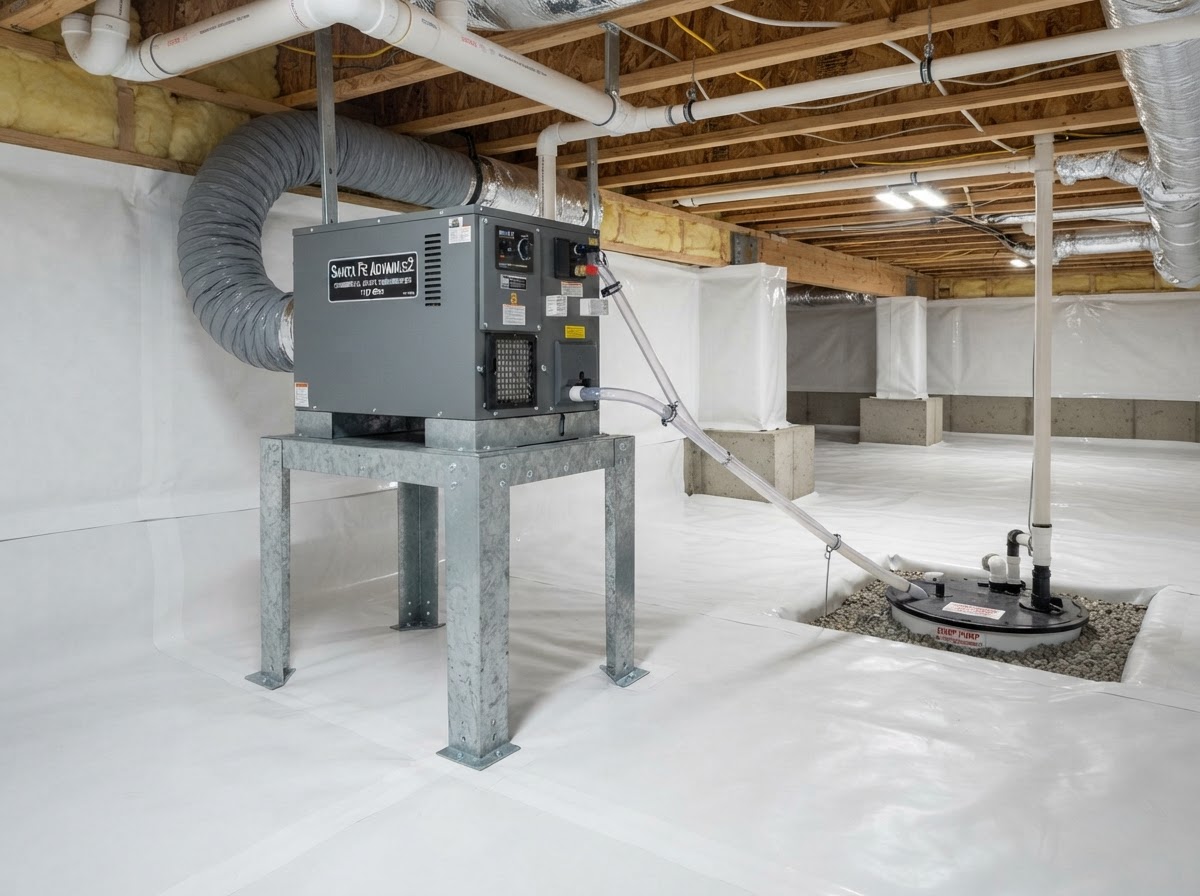
A crawl space dehumidifier is not the small portable unit used in a damp basement — it is a sealed, commercial-grade unit sized to the cubic footage of the crawl space, designed to run quietly for long periods in a tight space. Installation involves selecting a unit with enough capacity (measured in pints per day) for the crawl space volume, placing it where air can circulate, and — critically — running a condensate drain line so the collected water is discharged outside or to a sump pump rather than collected in a bucket that has to be emptied. The unit is plugged into a dedicated outlet (or wired in), and the drain line is run to a safe discharge point. In an encapsulated crawl space the dehumidifier is the final component that holds the sealed space dry after the vapor barrier and sealed vents have cut off the bulk of the moisture.
When do you need a crawl space dehumidifier?
A dehumidifier is needed when the crawl space air stays too humid even after sealing, or when a home is being encapsulated and needs conditioning. The signs include:
- Crawl space relative humidity reading above roughly 55–60% during an inspection, even with a vapor barrier present.
- A sealed crawl space that still shows condensation on ductwork or pipes.
- An existing dehumidifier that runs constantly but cannot hold humidity down, meaning it is undersized.
- An existing unit that has stopped running, is leaking, or drains into a bucket that no one empties.
- A home being encapsulated that needs conditioning to complete the seal.
- Mold or musty smells returning after a previous encapsulation, pointing to humidity creeping back up.
Why do Kernersville crawl spaces need dehumidification?
Even a sealed crawl space in central North Carolina cannot always stay dry on its own. The region's long humid season means the air inside the crawl space — and any air that migrates in through the building above — carries moisture that has to go somewhere. Concrete foundation walls also pass small amounts of moisture vapor inward, and the HVAC system can introduce humidity if ductwork is leaky. Without a dehumidifier, that residual moisture can push the crawl space above the mold threshold during a humid Piedmont summer, even with a good vapor barrier. The dehumidifier's job is to hold the air below that threshold continuously, so the moisture that does get in is removed before it can condense on the wood. It is the component that turns a sealed crawl space into a reliably dry one.
Across the Kernersville 27284 and 27285 zip codes in Forsyth County, this residual humidity is what makes a dehumidifier the finishing piece of most encapsulation jobs. It is one of the most common reasons homeowners contact us for crawl space services in Kernersville.
What affects the cost of dehumidifier installation?
Cost is driven by the capacity of the unit (larger crawl spaces need higher pint-per-day ratings), the length and complexity of the condensate drain line run to a discharge point, whether a dedicated electrical outlet needs to be added, and whether the installation is part of a full encapsulation or a standalone upgrade. Replacing an existing failed unit is less involved than a first-time install that needs electrical and drainage run. Your written quote specifies the unit size, the drain routing, and any electrical work, with the cost drivers behind each.
What does the dehumidifier installation process look like?
- Inspection. The crawl space is inspected for humidity levels, existing equipment, drainage options, and electrical availability.
- Written quote. You receive a quote specifying the dehumidifier capacity, drain line routing, and any electrical work.
- Unit selection and placement. A unit sized to the crawl space volume is placed where airflow is unobstructed.
- Drain line installation. A condensate line is run from the unit to a discharge point outside or to a sump pump, so no manual emptying is needed.
- Electrical connection. The unit is plugged into a dedicated outlet or wired in, with any needed electrical work completed.
- Setpoint and testing. The humidistat is set to hold the target humidity, and the unit and drain are tested.
- Final check. The crew verifies the drain discharges correctly and walks you through filter maintenance.
Frequently asked questions
Can I use a regular portable dehumidifier from the hardware store?
A portable unit is not built for the continuous duty and tight space of a crawl space — it typically cannot drain automatically, it is not sealed against the dust and humidity of the environment, and it is undersized for the volume. A crawl space dehumidifier is sealed, sized to the space, and plumbed to drain automatically so it can run unattended. The inspection sizes the right unit for your crawl space.
How much does the dehumidifier add to my electric bill?
A sealed crawl space dehumidifier runs intermittently once the target humidity is reached, not constantly, so the draw is modest compared to an undersized portable unit running nonstop. Sealing and insulating the crawl space also reduces the humidity load on your HVAC, which can offset some of the dehumidifier's run cost. The exact impact depends on the unit size and how wet the space was.
Does the dehumidifier need maintenance?
Yes — the filter should be checked and cleaned periodically so the unit runs efficiently, and the drain line should be confirmed clear so condensate flows freely. The inspection covers the maintenance schedule for your specific unit, and the crew walks you through filter access at installation.
Will a dehumidifier work without a vapor barrier?
It will run, but it will struggle to keep up. Without a vapor barrier, the soil releases moisture faster than a dehumidifier can remove it, so the unit runs constantly and humidity still creeps up. The vapor barrier cuts the load, and the dehumidifier handles the residual — the two work together.
What happens if humidity stays high in the crawl space?
Above the mold threshold, mold and wood rot resume growth, the musty smell returns, and any insulation in the space can absorb moisture. A dehumidifier is what holds the sealed space below that threshold, so skipping it leaves the encapsulation vulnerable to the same problems it was meant to solve.